Key takeaways
- Visual quality shapes an early credibility judgment, but serious buyers need evidence they can inspect.
- A useful case names the work, period, evidence source, measured outcome, context, and limits with client permission.
- Use testimonials only when they are genuine, attributable under the agreed permission, and specific enough to help a decision.
- Place proof beside the claim it supports and provide deeper evidence for buyers who need to verify it.
01
Design earns the first look; evidence earns the second
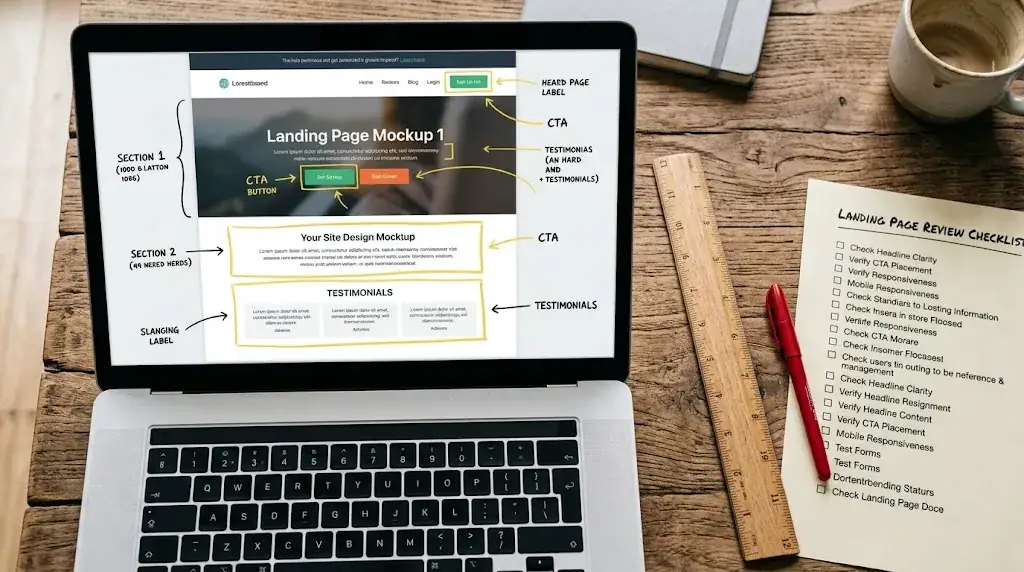
Stanford’s web credibility research and later studies show that visual presentation can strongly influence credibility judgments. That does not make polish proof. It means broken layouts, generic stock patterns, inconsistent identity, and poor information architecture can prevent strong evidence from being considered.
Use coherent typography, spacing, navigation, responsive behavior, and real imagery where permitted. Then make the substantive questions easy to answer: who is responsible, what do they do, for whom, how does the work proceed, what evidence exists, and how can someone verify or contact the organization?
02
Use the strongest available evidence for each claim
A client logo proves only that some relationship may have existed unless the scope is stated and permission is current. A testimonial records an attributed opinion. A case study can document implementation and measured response. Original data can support a market claim when its method is visible. Certification proves a defined qualification, not every outcome.
Build a claim ledger with the exact sentence, evidence source, owner, permission, last review, and limitation. Remove or revise claims when the evidence expires. This is more durable than adding another strip of badges nobody can interpret.
Swipe to compare every column
| Proof type | What it can support | Required context |
|---|---|---|
| Case study | Work and measured response | Client, scope, period, source, limits |
| Testimonial | A person’s experience | Authenticity, role, permission, specificity |
| Method artifact | How the team approaches work | Version, assumptions, example, owner |
| Certification | Defined training or standard | Issuer, status, scope, verification |
03
Put proof at the point of doubt
Place relevant evidence near the promise it supports. A buyer considering CRM integration needs architecture, recovery, and data-governance evidence—not a generic quote about creativity. Link to the complete case or method for someone performing deeper evaluation.
Use captions that explain what an image shows and why it matters. Blur private customer data, names, account identifiers, and irrelevant interface details. Do not blur the source so heavily that a screenshot becomes decorative theater; describe the measurement and preservation method in text.
04
Review credibility as a maintained system
Quarterly, check named people, addresses, contact routes, offers, certifications, statistics, logos, links, accessibility, and client permissions. Ask sales which proof buyers request and which claims create confusion. Archive evidence that no longer represents the work.
Track meaningful interaction with proof pages, qualified inquiries, sales feedback, and corrections. A credible site does not promise certainty. It makes its claims easy to judge and its limits difficult to miss.
Primary sources and further reading
Use the source material to validate details against your own context and current platform configuration.
- Stanford Web Credibility Project: Research
- Stanford: How people evaluate a website’s credibility
- Aesthetics and credibility in website design
- Nielsen Norman Group: B2B website usability research
This field note follows the XenGrowth editorial policy: primary sources where available, visible limitations, material review dates, and no invented first-hand experience.
Stay with the problem