01Conversion & UX9 min read
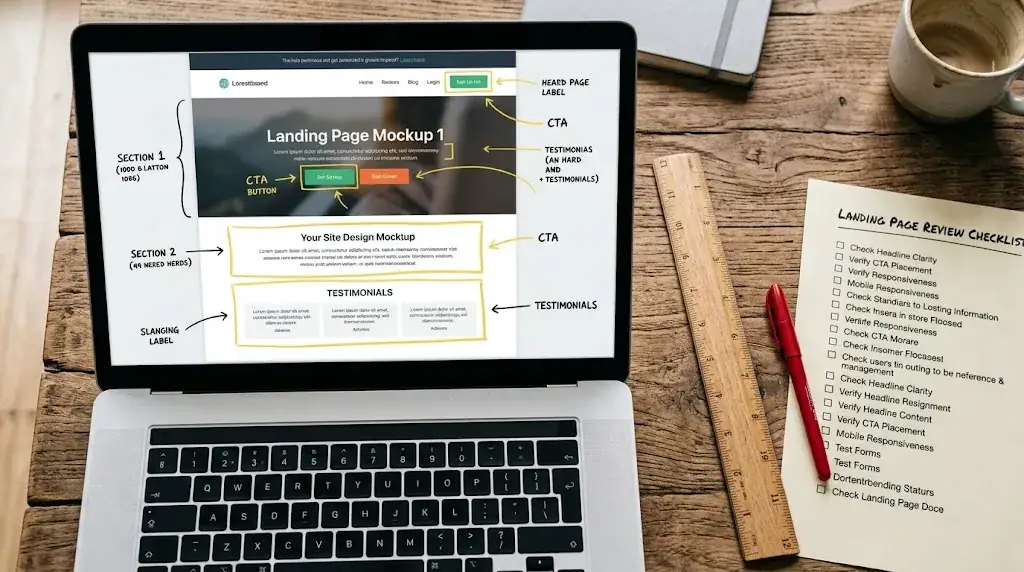
The B2B Landing Page Conversion Audit Checklist
A structured way to audit a B2B landing page across message match, proof, performance, and mobile usability before assuming a redesign is the fix.
Clear-eyed guidance for landing pages, accessible forms, proof, performance, information architecture, conversion measurement, and lead journeys that respect the person using them.

Topic
Read with a job in mind
The collection grows around distinct reader problems, not small changes in phrasing. Start with the guide closest to the decision in front of you.
A structured way to audit a B2B landing page across message match, proof, performance, and mobile usability before assuming a redesign is the fix.

Design a staged B2B form around the next decision, preserve context and accessibility, and stop “progressive” forms becoming longer questionnaires.

Build layered abuse protection with server validation, quiet risk signals, accessible fallback, replay defense, and a review loop for false positives.

Design confirmation, reminders, rescheduling, preparation, and recovery so a promising conversation does not disappear between the form and the meeting.

Explain ranges, cost drivers, inclusions, exclusions, setup work, ongoing fees, and decision paths without fake precision or a mystery quote wall.

Operate message match across intent, claim, audience, offer, evidence, qualifiers, and CTA—without cloning a page for every keyword.

Decide when a content gate is justified, show the value before asking, minimize fields, separate consent, and keep a genuinely useful public path.

Review routing and qualification questions for unsupported proxies, inaccessible choices, unknowns, overrides, and downstream disparities before automating rejection.

Build a privacy-aware event model that distinguishes technical failure, validation friction, uncertainty, interruption, and deliberate exit without recording what people typed.

Recruit beyond the happiest accounts, ask about real events, preserve consent and contradiction, and turn interviews into bounded decisions rather than decorative proof.

Build an independent win/loss program with explicit sampling, event-based interviews, CRM reconciliation, counterevidence and actions owners can test.

Turn customer reviews into bounded research with provenance, deduplication, incentive labels, platform context and no invented market statistics.

Govern recording, transcription, redaction, access, AI analysis, retention, quotation, and deletion before mining calls for messaging or product insight.

Map the real buying group by decision, evidence, risk, handoff, and timing—then build a connected content path instead of four disconnected personas.

Compare like with like using dated criteria, primary evidence, material qualifiers, competitor review, corrections, and a decision path that admits who should choose differently.

Build a decision aid with baseline definitions, ranges, costs, attribution limits, uncertainty and a downloadable model a buyer can challenge.

Operate customer proof with source verification, separate permissions, result context, material-connection disclosure, accessibility, change review, and a respectful withdrawal path.

An evidence threshold for regional pages, so each helps a local buyer instead of becoming a place-name variation that funnels everyone elsewhere.

Use field LCP, INP, and CLS to find experience failures, then connect them to page intent, device, form completion, lead quality, and commercial outcomes without inventing causation.

Design visible labels, instructions, forgiving inputs, error summaries, focus movement, preserved values, confirmation, and recovery for keyboard, screen-reader, speech, and mobile users.

Audit identity, expertise, evidence, limitations, process, commercial terms, privacy, maintenance, and design so credibility survives a closer look.

Show buyers the commercial model, realistic ranges, inclusions, exclusions, cost drivers, commitments, and next decision—even when the final scope requires discovery.
Use information scent, task-based labels, hierarchy, local context, breadcrumbs, and observed findability to help visitors move from a question to the right service or proof.

Reduce lead-form burden by separating routing-critical information from sales curiosity, using progressive collection, forgiving inputs, and downstream enrichment with clear governance.

Define the decision, contrast, assignment, outcome, guardrails, sample assumptions, stopping rule, and implementation path before traffic enters an experiment.

Design consent-aware measurement with event purpose, first-party state, data minimization, quality checks, modeled-data boundaries and CRM reconciliation.

A ranking only opens the door. This scorecard follows the visit through intent fit, page clarity, performance, accessibility, task completion, lead quality, and commercial outcomes.
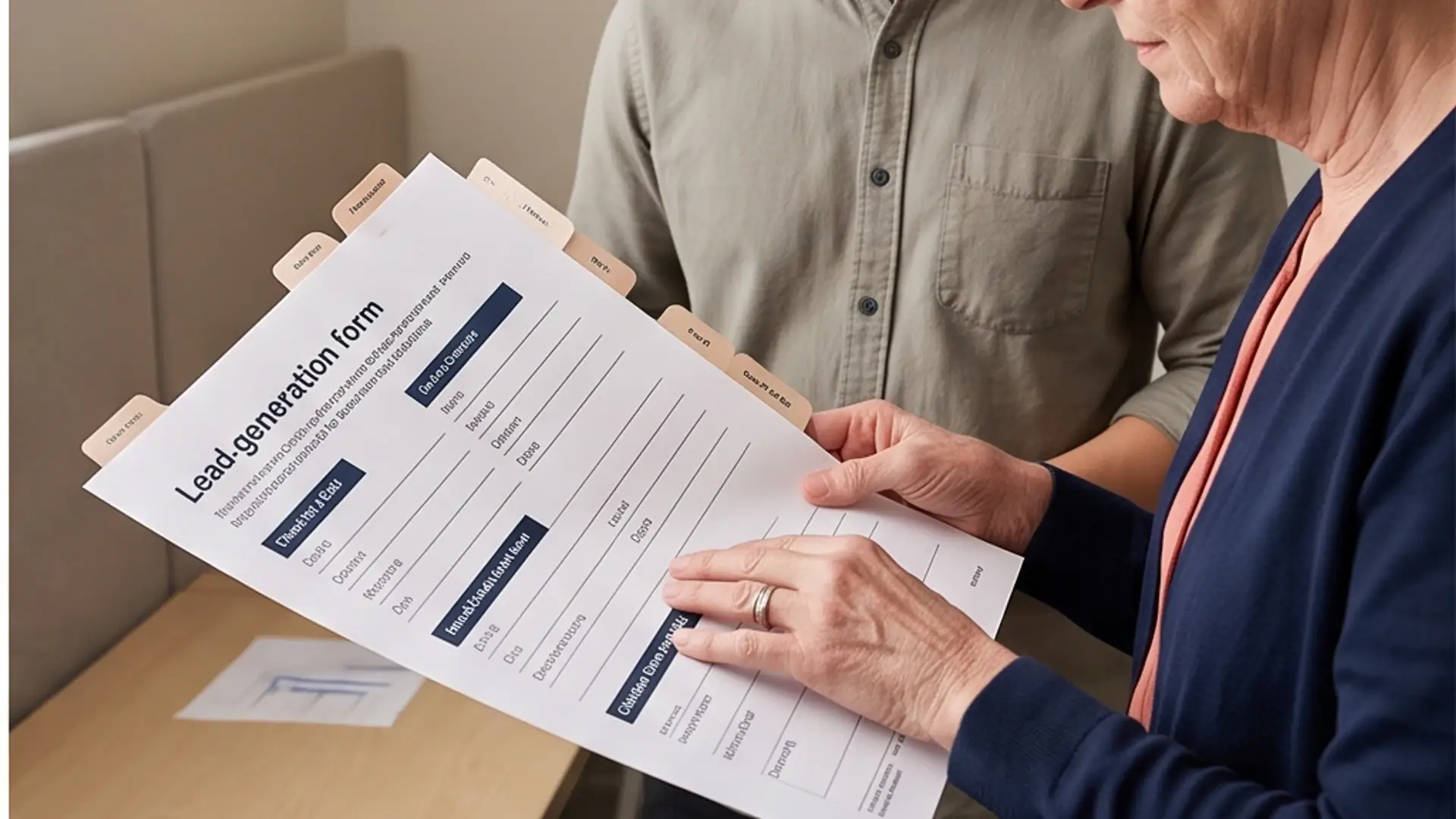
When a form fails, the visitor needs a next action—not a red border and a mystery. Use clear labels, useful errors, deliberate focus, preserved input, and accessible recovery.

Budget LCP, INP, CLS, images, fonts, scripts, and third-party tags before they accumulate. Then judge speed beside the quality of the conversations the page earns.

“Message received” is a promise about the operating system behind the page. Store the inquiry once, route it safely, set an honest response window, and recover when CRM sync fails.
Useful starting questions
Related practice