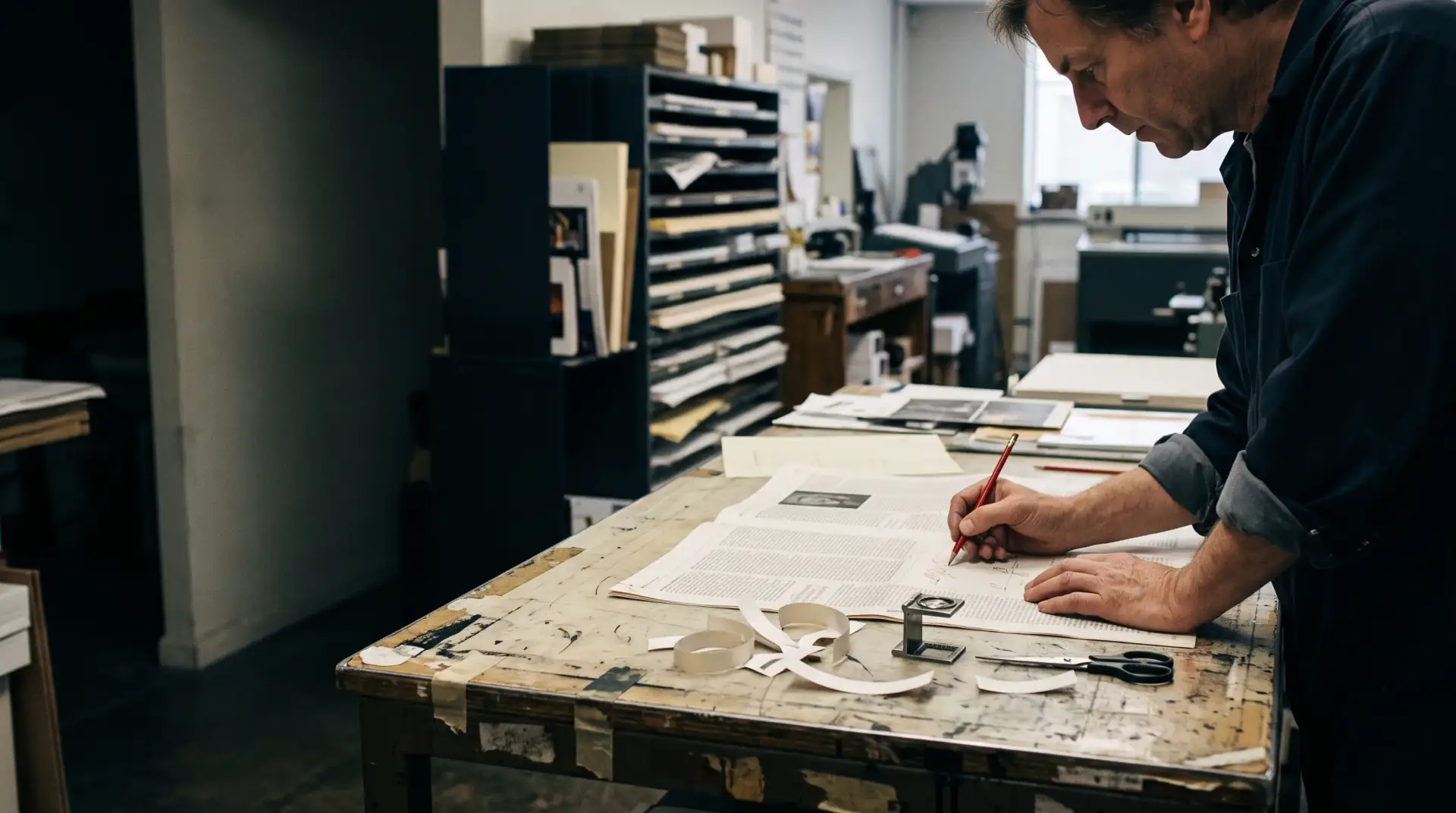
Much content gets written, posted and forgotten, and the expertise behind it rarely gets quoted. As a content marketing agency, we start with one point of view you can defend, then build it into a pillar piece, expert quotes, a creator brief and a press pitch that point at each other. Where an asset links to your site we tag the link and count what follows. Quotes and mentions without a link are harder to trace, and the report says so.
A content marketing agency turns what your experts know into material buyers trust and others quote. We start with one defensible point of view, build it into a cornerstone piece, then cut expert quotes, a creator brief, a press pitch and email and sales copy from it, all pointing at each other so search and AI answers see one consistent source. Where an asset links to your site we tag the link and count what follows. Quotes and mentions without a link are harder to trace, and the report says so.
What we actually do
The mechanics, in plain terms.
We interview the people who know the subject and pull out the claim only you can make, with the evidence behind it. That becomes one cornerstone asset. From it we cut an article, a few expert quotes for journalists, a brief for creators whose audience already trusts them, and email and sales copy that use the same language. Distribution is planned before writing starts, and each asset links back to the others so search and AI answers see one consistent source. Where it saves time, drafting, scheduling and analytics collection run through the content tools of the system we build and run for clients: a content plan, a media library, A/B experiments, publishing, and a brand setting for each client. Anything that goes live under your name is read and approved by a person first.
01
Point-of-view workshops
02
Expert interviews
03
Cornerstone content and original data
04
Creator discovery and briefs
05
Press pitches and expert quotes
06
Content plan, publishing and tracking
01LinkedIn
02YouTube
03Instagram
04TikTok
05Podcast platforms
06Email
07CMS platforms
What you get
What is different once it runs.
01
One clear point of view, with proof attached
02
A cornerstone piece cut into many formats
03
Creators briefed on a message, not a script
04
Quotes, coverage and, where a link is tagged, the calls that followed
How the first weeks run
A typical start, step by step.
Timing moves with your systems and how fast we get access. The order rarely does.
01
Find the claim
First two weeks. Interview your experts, test the idea against what competitors already say, and gather the proof.
02
Build the cornerstone
Weeks two to five. One substantial asset, reviewed by the people whose name goes on it.
03
Brief the voices
Weeks four to six. Creators, spokespeople and journalists each get a brief that fits how they work.
04
Reuse and count
From week six. Coverage and content are cut into search, sales, email and campaign material, and each piece is read against the calls and forms we can attribute to it.
Where we stop
What we won't do.
Saying no early is cheaper for both of us than explaining it later.
Publish under your name without an expert reading it first
Pay for coverage and call it earned
Brief creators to read a script they do not believe
Recommend creators when buyers do not find this kind of offer through them
Field notes
Read the reasoning first.
These notes cover the trade-offs behind this work. Use them to test your own brief, or to decide that a different first move makes more sense.
A brief without a banned-claims list and a fact-check without a named owner fail the same way: quietly, at scale. Here is the production system that catches errors before they publish.
A one-page messaging framework, a positioning workshop agenda, a proof inventory and an objection handling table, so what the company says is agreed, short and backed by evidence on file.
Straight answers
What people ask before they buy.
Where the honest answer depends on your setup, we say so.