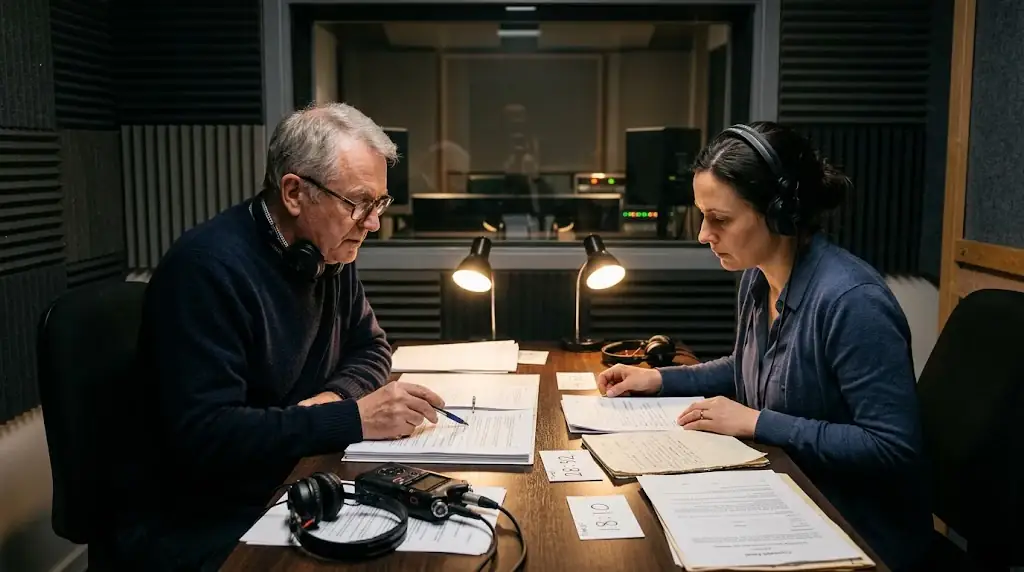
Key takeaways
- Tell the expert how the conversation will be recorded, edited, attributed, reviewed, and reused.
- Ask for mechanisms, decisions, constraints, examples, and source material—not polished predictions.
- Verify external facts separately and preserve the distinction between observation, interpretation, and opinion.
- Use review to catch errors and confidentiality problems without handing editorial control to a promotional rewrite.
01
Define the evidence you need before scheduling the call
A broad invitation to “share thought leadership” produces slogans because it asks the guest to perform expertise. Start with the reader’s decision and the gap existing documentation does not answer. Prepare a small set of questions about how the work is actually done, where it fails, and what evidence changes the expert’s mind.
Send the topic, intended audience, recording method, attribution terms, expected review, and publication formats in advance. Confirm whether the discussion is on the record, on background, or confidential. Do not retrofit those boundaries after a sensitive detail becomes useful.
Swipe to compare every column
| Prompt type | What it can reveal | Follow-up |
|---|---|---|
| Walk me through the last decision | Sequence and ownership | Where did context disappear? |
| What evidence would reverse this choice? | Decision threshold | How is that evidence collected? |
| Where does the standard advice fail? | Boundary and counterexample | Who is most exposed to the failure? |
| Which detail is often reported incorrectly? | Verification risk | What primary source settles it? |
02
Preserve context while the conversation is still fresh
Keep the recording when consent and policy allow, a timestamped transcript, interviewer notes, and links to documents mentioned. Automated transcripts are drafts: names, numbers, negation, acronyms, and technical terms need checking against the audio.
Mark statements as first-hand observation, organizational practice, interpretation, opinion, or external factual claim. That ledger tells the editor which passages can stand as attributed experience and which require independent verification.
03
Write with the expert, not as the expert
Do not invent a first-person article and place the expert’s name on it. Build an argument from the interview, source material, and editorial analysis. Use direct quotations only when the wording adds meaning; paraphrase accurately when clarity improves and attribution remains visible.
SPJ’s ethics guidance emphasizes verifying information before release, identifying sources clearly, and providing context. An impressive title does not exempt a claim from checking. When the expert cites a law, benchmark, product behavior, or event, find the primary record.
04
Set a review boundary that protects both accuracy and independence
Offer a focused fact and quotation review with a deadline. Ask the expert to flag factual errors, confidentiality issues, misunderstood meaning, and quotations that do not match the record. Keep requested promotional expansion or softened criticism as editorial decisions rather than automatic changes.
Record material changes and retain the approved quotation context. If the final argument differs substantially from what the interview can support, return for another conversation or narrow the article. A byline should represent responsibility, not borrowed authority.
Primary sources and further reading
Use the source material to validate details against your own context and current platform configuration.
- Society of Professional Journalists: Code of Ethics
- AAPOR: Disclosure Standards
- Google Search Central: Helpful, reliable, people-first content
This field note follows the XenGrowth editorial policy: primary sources where available, visible limitations, material review dates, and no invented first-hand experience.
Stay with the problem