Key takeaways
- Create a profile only for an eligible real business and represent the name, address or service area, phone, category, and customer access truthfully.
- Keep company ownership, stable location IDs, evidence, verification, owned page, phone routing, and operating systems aligned.
- Use a future opening date and pre-opening communication only when the operational date is credible.
- Run a customer journey rehearsal before declaring the location open.
01
The opening date should not be a marketing guess
Construction targets Friday, hiring targets Monday, the phone vendor says “next week,” and the profile is published with the most optimistic date. Customers arrive before the site can serve them, and user edits begin before the operating team has a stable record.
Use a launch record with entity and location IDs, eligibility model, real-world name, address and entrance, coordinates, service area, opening date confidence, hours, categories, phone, URL, booking, accessibility, signage, licenses where relevant, company owner, verification evidence, and accountable launch lead.
Swipe to compare every column
| Gate | Evidence | Do not launch when |
|---|---|---|
| Eligibility | Real operation and customer contact model | Virtual presence is being presented as a branch |
| Identity | Stable name, address, phone, URL, store code | Core records still conflict |
| Access | Customer entrance, hours, staff, service readiness | A visitor cannot be served |
| Recovery | Owners, evidence, support and rollback | One outside account holds custody |
02
Use pre-opening visibility to reduce uncertainty
Google allows a future opening date up to one year ahead, and an eligible verified profile can appear 90 days before opening. Use that period for accurate progress photos, useful updates, and a credible date—not for collecting reviews before anyone has had an experience.
If the date changes, update the profile, location page, opening posts, campaigns, booking inventory, call message, directories, and local team briefing together. Explain the change plainly. A quiet date edit does not reach someone who saved an earlier announcement.
03
Rehearse discovery to arrival
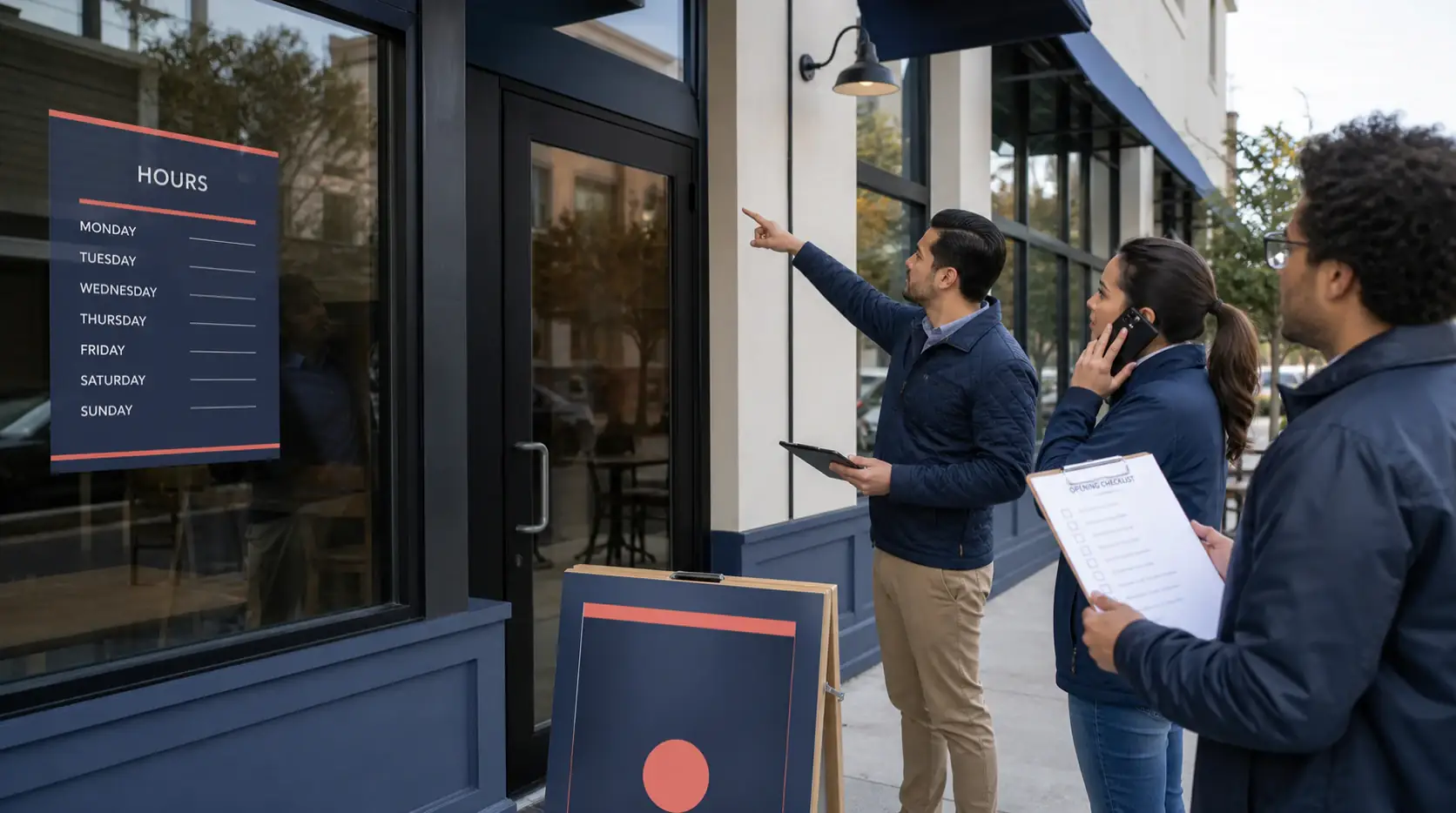
Search the name and category on mobile, tap directions, approach from realistic routes, inspect the pin and entrance, call the number, visit the page, use the booking or ordering link, confirm hours, and test accessibility information. Run the journey after dark if lighting and signage matter.
Verify structured data and internal links, but do not use markup to imply an open branch before the visible content and operation support it. The location page should contain locally useful details rather than a city-name substitution.
04
Watch the first ninety days as an operating period
Monitor suggested edits, wrong turns, calls, booking errors, hours questions, review themes, duplicate profiles, and service requests the branch cannot fulfill. Give staff a fast correction route and preserve evidence when public data is wrong.
Measure time to verified presence, journey pass rate, customer-impacting errors, qualified local actions, and correction time. Launch success is not the date the profile first appears. It is the point at which discovery reliably leads to the intended customer experience.
Primary sources and further reading
Use the source material to validate details against your own context and current platform configuration.
- Google: Add a business opening date
- Google: Guidelines for representing your business
- Google: Add or claim your Business Profile
This field note follows the XenGrowth editorial policy: primary sources where available, visible limitations, material review dates, and no invented first-hand experience.
Stay with the problem