
Do You Need More Agents—or One Better-Designed Workflow?
Choose single-agent, deterministic pipeline or multi-agent orchestration by task shape, context boundaries, parallelism and failure isolation.
Research, analysis, and practical arguments about AI-assisted discovery, demand, automation, CRM, sales, and the operating choices that connect them.
Blog
Latest field notes
Each article starts with a decision, failure mode, or buyer question. Sources and uncertainty stay visible so the work can be challenged and improved.
Choose single-agent, deterministic pipeline or multi-agent orchestration by task shape, context boundaries, parallelism and failure isolation.

Before Target ROAS or Maximize Conversion Value, prove that conversion values reflect real economics, arrive on time, survive reconciliation, and change when outcomes change.

Design controlled asset experiments around a clear hypothesis, stable settings, meaningful creative contrast, sufficient time, and a decision you can actually make afterward.

Build an event ledger that explains differences among Meta, browser analytics, CRM stages, and authoritative orders without treating every mismatch as a tracking failure.

Connect CRM outcomes to Meta with stable identity, stage definitions, timely events, eligibility controls and monitoring that catches sales-process bias.

Use randomized lift, holdouts or geo experiments to estimate incremental outcomes—and keep inconclusive studies from becoming convenient stories.

Separate message wear, audience saturation, delivery shifts, offer problems, tracking faults, and ordinary variance before replacing creative that may not be the cause.

Control spend with exposure limits, conversion-delay awareness, anomaly detection, approvals, verification, and rollback instead of letting a noisy forecast steer live budgets.

Govern AI-assisted ad production with approved facts, claim classes, source evidence, human review, platform policy, versioning, and rapid withdrawal when reality changes.

Use field LCP, INP, and CLS to find experience failures, then connect them to page intent, device, form completion, lead quality, and commercial outcomes without inventing causation.

Design visible labels, instructions, forgiving inputs, error summaries, focus movement, preserved values, confirmation, and recovery for keyboard, screen-reader, speech, and mobile users.

Audit identity, expertise, evidence, limitations, process, commercial terms, privacy, maintenance, and design so credibility survives a closer look.

Show buyers the commercial model, realistic ranges, inclusions, exclusions, cost drivers, commitments, and next decision—even when the final scope requires discovery.

Use information scent, task-based labels, hierarchy, local context, breadcrumbs, and observed findability to help visitors move from a question to the right service or proof.

Reduce lead-form burden by separating routing-critical information from sales curiosity, using progressive collection, forgiving inputs, and downstream enrichment with clear governance.

Define the decision, contrast, assignment, outcome, guardrails, sample assumptions, stopping rule, and implementation path before traffic enters an experiment.

Design consent-aware measurement with event purpose, first-party state, data minimization, quality checks, modeled-data boundaries and CRM reconciliation.

GA4 can now group referrals from assistants such as ChatGPT and Gemini, while Google AI Overviews and AI Mode remain part of organic search. Here is the reporting split to preserve.
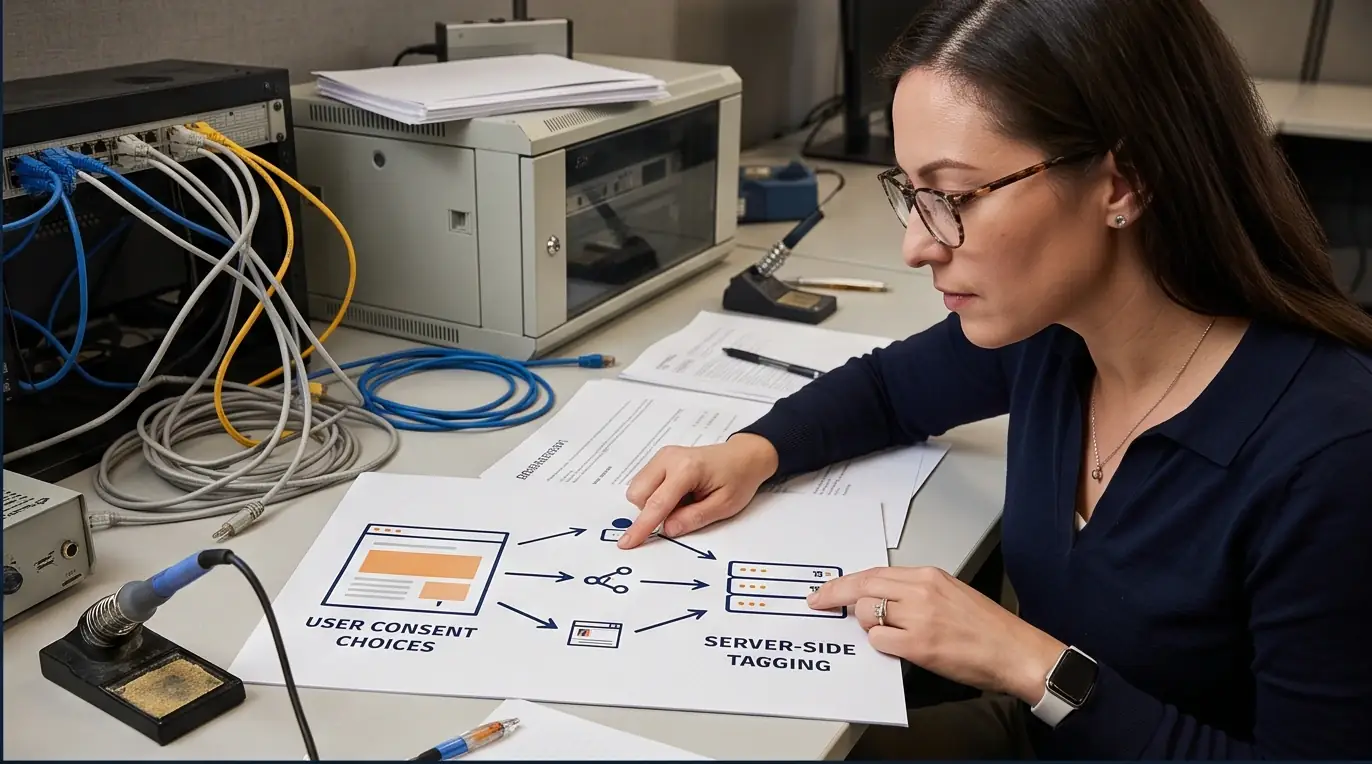
A measurement plan for consent mode and server-side tagging: what stays in the browser, what moves to the server, and what must be tested before launch.

Use Organization structured data, stable entity details, and careful sameAs references to reduce ambiguity without inventing profiles or stuffing JSON-LD.
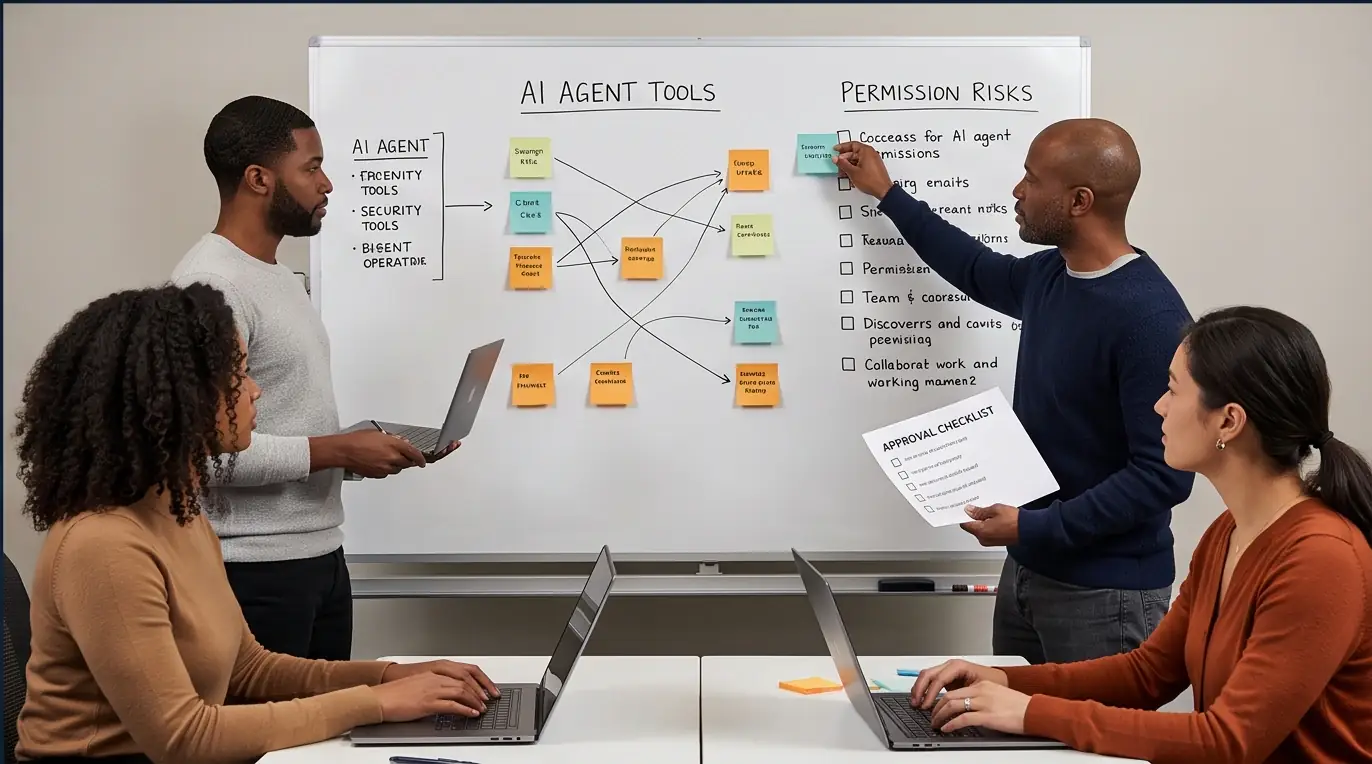
A practical MCP threat model for agents that can read CRM data, browse untrusted pages, create campaigns, or call production tools.

Design CRM webhook consumers for duplicates, delays, reordering, timeouts and partial failure before a retry creates a second record or repeats an action.

Measure endpointing, model, tool, synthesis, playback, interruption, and recovery separately so a fast demo does not hide an exhausting conversation.
Test whether fit and engagement scores still separate useful sales conversations from noise, then change routing only with outcome evidence and sales feedback.

Read GA4 modeled key events without pretending they are directly observed people, and reconcile platform attribution with CRM outcomes before making budget decisions.

Google’s new report adds useful visibility data and a fresh opportunity to overclaim. Here is what its impressions and dimensions show—and what still belongs in analytics and the CRM.

Run an AI-search visibility test that another person can repeat. Discovery, retrieval, citation, answer use, traffic, and business outcomes stay separate instead of becoming one convenient score.

Google retired FAQ rich results, but readers still arrive with questions. Build direct answers without manufacturing thin pages or pretending schema is an AI-search switch.

“Block AI” is not a complete content policy. Separate search inclusion, snippets, grounding, and training before choosing rules for OAI-SearchBot, GPTBot, Googlebot, or Google-Extended.

Local visibility is wasted when the team cannot reach, route, or serve the resulting work. Align profiles, service areas, local pages, reviews, and measurement with the territory the business can cover.