Marketing measurement starts where the form ends. These posts cover CRM integration, lifecycle ownership, routing, offline conversions, attribution models and the reports leadership trusts, so spend can be traced to a closed sale.
Create a forecast operating rhythm around stage evidence, close-date movement, amount confidence, next steps, categories, and explicit manager judgment.
Carry promises, commercial terms, stakeholders, adoption goals, risk, dates, and ownership from sale through delivery so the renewal is not a surprise reconstruction project.
Keep a compact, searchable experiment record that preserves the decision, design, context, result, uncertainty, and follow-up—not just the winning slide.
Protect customer and pipeline records with field ownership, proposed changes, provenance, idempotency, conflict detection, verification, and a repair path.
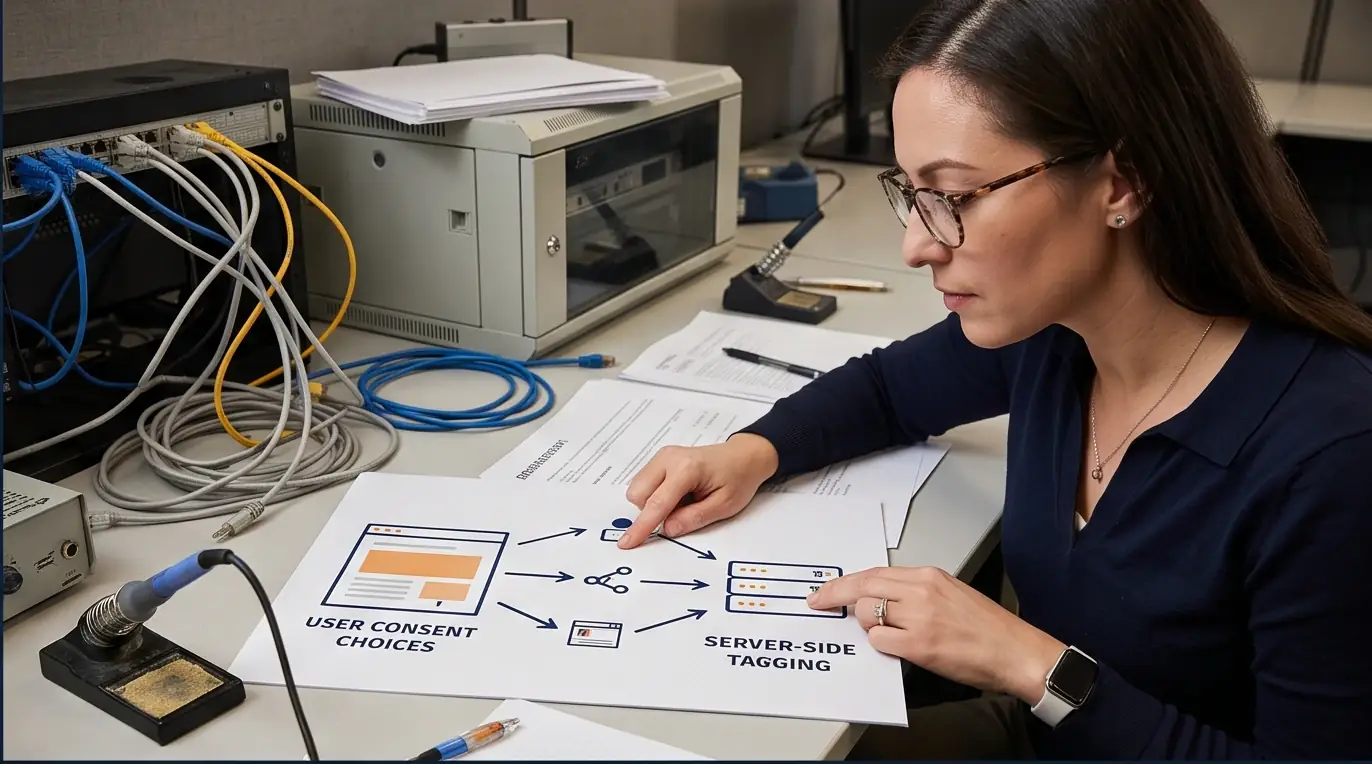
A measurement plan for consent mode and server-side tagging: what stays in the browser, what moves to the server, and what must be tested before launch.
Design CRM webhook consumers for duplicates, delays, reordering, timeouts and partial failure before a retry creates a second record or repeats an action.
Test whether fit and engagement scores still separate useful sales conversations from noise, then change routing only with outcome evidence and sales feedback.
Read GA4 modeled key events without pretending they are directly observed people, and reconcile platform attribution with CRM outcomes before making budget decisions.
Two similar CRM records are not automatically the same person or company. Match cautiously, preserve consent and history, review uncertain pairs, and fix the source that keeps creating duplicates.
When marketing and sales disagree about an MQL, the dashboard cannot settle the argument. Define the evidence, owner, timestamp, exits, and exceptions that make each lifecycle stage operable.
An owner ID does not mean a person accepted the lead. Design eligibility, capacity, fallback, acceptance, reassignment, and monitoring around accountable follow-up.
A working method for testing audience, problem, urgency, message, channel, sales capacity, and economics before a polished go-to-market deck hardens guesses into commitments.
How to measure inquiry age, define a useful first response, staff realistic service levels, recover missed routes, and test whether faster follow-up improves qualified outcomes in your business.
Before another tool writes to HubSpot, decide which system owns each record and what happens when webhooks repeat, arrive late, or describe a state that has already changed.
Connect campaign data with CRM stages, appointments or jobs, and revenue while keeping observed events separate from the credit an attribution model assigns.
Start with a question
Ask these before you read.
Where does context disappear between marketing and sales?
Which system owns each lifecycle event?
Can reported acquisition be reconciled with closed revenue?